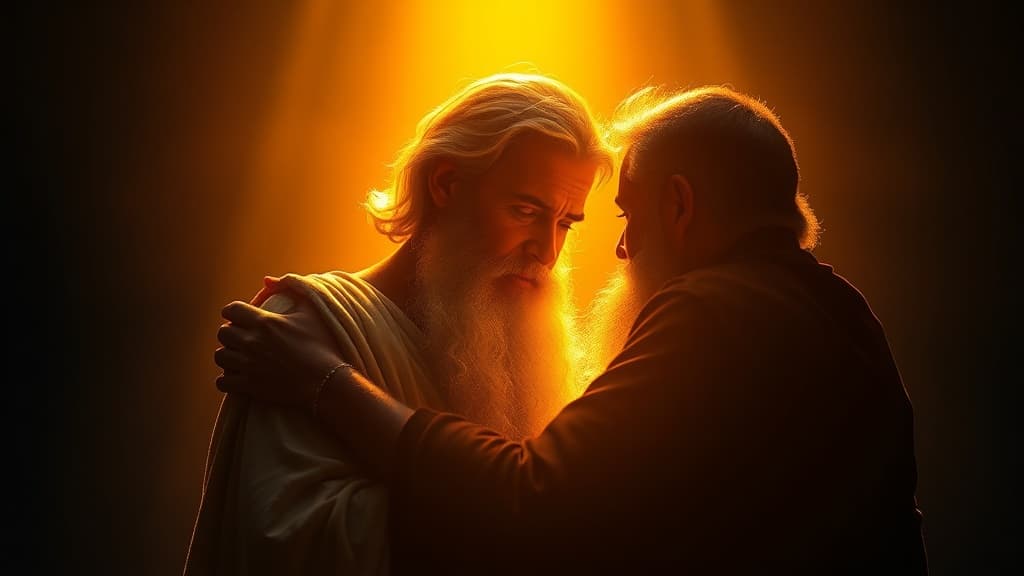
Hear a Just Cause, O Lord: Psalm 17 Study
Discover the rich meaning of Psalm 17 in this devotional study. Learn how David's prayer for vindication speaks to your own struggles today.
Testimonio
Change your heart radically through the love of Jesus Christ.
Hear a Just Cause, O Lord: A Deep Devotional Study of Psalm 17
There are moments in the Christian life when we feel utterly misunderstood. When accusations fly. When our integrity is questioned by those who don't know our hearts. In these dark valleys, Psalm 17 becomes a refuge—a prayer that gives voice to the cry of the righteous soul seeking vindication from the only Judge who truly matters.
This psalm, penned by David during one of his many seasons of persecution, offers us a template for approaching God when we've been wronged. But it's more than a prayer for personal justice—it's a masterclass in how to maintain spiritual integrity under fire while keeping our eyes fixed on eternal hope.
The Setting: A Prayer Born from Crisis
The superscription identifies this as "A Prayer of David" (tephillah l'David)—one of only five psalms explicitly labeled as prayers (along with Psalms 86, 90, 102, and 142). The Hebrew word tephillah suggests an urgent intercession, a cry that demands heaven's attention.
While Scripture doesn't pinpoint the exact circumstances, the psalm's themes align powerfully with David's years fleeing from King Saul. Here was a man anointed by God, chosen to lead Israel, yet hunted like a criminal by the very king he faithfully served. David had multiple opportunities to kill Saul and seize the throne by force, yet he refused. This psalm captures the heart of a man who chose to wait for God's vindication rather than take matters into his own hands.
Verse-by-Verse Devotional Study
Verses 1-2: The Appeal for a Hearing
"Hear a just cause, O LORD; attend to my cry! Give ear to my prayer from lips free of deceit. From your presence let my vindication come! Let your eyes behold the right!"
David opens with a bold claim: his cause is tsedeq—righteous, just, legitimate. This Hebrew word carries the weight of legal righteousness, as if David is presenting his case in the divine courtroom.
Notice he doesn't merely claim innocence; he invites scrutiny. "My prayer comes from lips free of deceit" (lo misipatayim mirmah). David isn't playing word games with God. He's not spinning the narrative. He's laying his case bare before the only Judge whose opinion ultimately matters.
Application: When we bring our grievances to God, do we come with the same transparency? It's tempting to present only our side of the story, even to God. David models something different: he invites divine examination. He wants truth more than he wants to win.
The phrase "from your presence let my vindication come" (milpaneyka mishpati yetse) reveals David's deepest conviction: true vindication can only come from God. Not from public opinion. Not from political maneuvering. Not from defeating his enemies. Only from the throne of heaven.
Verses 3-5: The Tested Heart
"You have tried my heart, you have visited me by night, you have tested me, and you will find nothing; I have purposed that my mouth will not transgress. With regard to the works of man, by the word of your lips I have avoided the ways of the violent. My steps have held fast to your paths; my feet have not slipped."
Here David makes an astonishing claim—his heart has been tested and found blameless. The Hebrew bachanta (tested) suggests the refining process of metals in fire. God has put David through the crucible, and he's emerged pure.
But this isn't prideful self-righteousness. Note the key phrase: "by the word of your lips" (bidbar sepateyka). David's moral compass isn't his own intuition or cultural norms—it's the revealed Word of God. He has deliberately chosen to avoid "the ways of the violent" (orchot parits), literally "the paths of the destroyer."
Consider what this meant practically. David had armed men willing to follow him. He had opportunities to ambush Saul. The "way of the violent" was an open road. But David chose the narrow path marked out by God's Word, even when that path led through suffering.
Application: Our integrity isn't proven in comfortable times. It's proven when we have the power to take shortcuts and choose not to. When we could retaliate and don't. When we could gossip and remain silent. The test of character comes when doing wrong would be easy and doing right costs us something.
Verses 6-9: The Cry for Protection
"I call upon you, for you will answer me, O God; incline your ear to me; hear my words. Wondrously show your steadfast love, O Savior of those who seek refuge from their adversaries at your right hand. Keep me as the apple of your eye; hide me in the shadow of your wings, from the wicked who do me violence, my deadly enemies who surround me."
David's confidence surges: "You will answer me" (ta'aneni)—not "might" or "could," but will. This isn't presumption; it's faith built on experience. David has called on God before and found Him faithful.
Two stunning images capture God's protective love:
"The apple of your eye" (k'ishon bat-'ayin) literally means "the little man of the daughter of the eye"—the pupil, that most sensitive part we instinctively protect. Just as we shield our eyes from harm, God shields His children.
"The shadow of your wings" (b'tsel k'napheyka) evokes the mother bird sheltering her young. Jesus would later use this same imagery for His longing love for Jerusalem (Matthew 23:37). Under those wings is safety, warmth, and the heartbeat of the One who loves us.
Application: When enemies surround us—whether they're people who oppose us or circumstances that threaten to overwhelm—we're invited to hide. Not in denial, not in escapism, but in the presence of God Himself. The shadow of His wings is the safest place in the universe.
Verses 10-12: The Portrait of the Enemy
"They close their hearts to pity; with their mouths they speak arrogantly. They have now surrounded our steps; they set their eyes to cast us to the ground. He is like a lion eager to tear, as a young lion lurking in ambush."
David doesn't minimize his opposition. His enemies are dangerous—heartless, arrogant, strategic, and predatory. The Hebrew libamo sageru ("they close their hearts") suggests a deliberate hardening, a willful rejection of compassion.
The lion imagery is particularly vivid. These aren't merely annoying critics; they're apex predators circling for the kill. David acknowledges the real danger he faces.
Application: Scripture never encourages us to pretend evil doesn't exist or that our struggles aren't real. Biblical faith doesn't require us to minimize threats—it requires us to maximize God. Yes, the enemies are lions. But God is the Lion of Judah.
Verses 13-14: The Prayer for Divine Action
"Arise, O LORD! Confront him, subdue him! Deliver my soul from the wicked by your sword, from men by your hand, O LORD, from men of the world whose portion is in this life."
This is an imprecatory section—David calling on God to act in judgment. The imperative kumah ("arise!") is a battle cry. David envisions God as a warrior rising from His throne to confront wickedness.
The phrase "men of the world whose portion is in this life" (mehaldalim meled chelqam bachayim) describes people whose entire vision extends only to earthly things. Their belly is their god (Philippians 3:19). They have no eternal perspective, no hope beyond the grave.
Application: We're not wrong to pray for God's intervention against evil. The key is that we leave the vindication to Him. David doesn't take up the sword himself against Saul; he asks God to wield His sword. There's a crucial difference between vengeful retaliation and prayerful petition for justice.
Verse 15: The Eternal Hope
"As for me, I shall behold your face in righteousness; when I awake, I shall be satisfied with your likeness."
Here the psalm reaches its glorious summit. After all the danger, all the enemies, all the crisis—David's eyes lift to something beyond this life entirely.
"I shall behold your face" (echezeh paneyka) points to the beatific vision—seeing God face to face. In the Old Testament, seeing God's face was associated with death (Exodus 33:20). But David anticipates a day when, in righteousness, he will finally see what Moses could only glimpse.
"When I awake" (b'hakits) likely refers to resurrection. David's hope extends beyond the grave. Whatever happens in this life—whether vindication comes or suffering continues—there's a morning coming when he will awake to perfect satisfaction.
"I shall be satisfied with your likeness" (eshbe'ah b'temunateyka). The Hebrew eshbe'ah means to be completely filled, glutted, satisfied to overflow. After a lifetime of longing, David anticipates a moment when every desire finds its fulfillment in God Himself.
Application: This is the perspective that sustains us through injustice. Our vindication may not come in this life. Our enemies may seem to prosper while we suffer. But there's a morning coming. We will awake. We will see His face. And we will be satisfied.
Five Lessons from Psalm 17 for Modern Believers
1. Present Your Case to the True Judge
When you're wronged, take it to God. Not to social media. Not to the court of public opinion. Pour out your heart to the One who sees everything, knows everything, and judges righteously.
2. Invite Divine Examination
Don't just tell God your side of the story—invite Him to search you. Ask Him to reveal any blind spots, any ways you may have contributed to the conflict, any sins you need to confess. Truth is more important than winning.
3. Let God's Word Be Your Standard
David avoided the way of the violent "by the word of your lips." Scripture must be our moral compass, especially when emotions run high and revenge feels justified. What does God's Word say about how to respond to enemies? That's your path.
4. Rest in His Protection Without Passive Resignation
Hiding under God's wings doesn't mean doing nothing. David fled. He protected his family. He made strategic decisions. But he did all this while trusting God as his ultimate defender. Active obedience and peaceful trust aren't contradictions.
5. Keep Eternity in View
The deepest peace comes from knowing that this life isn't the whole story. David's enemies had their "portion in this life"—and that's all they'll ever have. But David's portion is God Himself, and that inheritance is eternal.
A Prayer from Psalm 17
Lord God, You are the righteous Judge who sees all things truly. I bring my struggles before You today—not to manipulate You to my side, but to invite Your truth into my situation. Search me, O God, and know my heart. Test me and know my anxious thoughts.
Where I have sinned, forgive me. Where I have been wronged, vindicate me in Your time and way. Protect me as the apple of Your eye. Hide me under the shadow of Your wings.
When enemies surround me—whether people or circumstances or spiritual forces—remind me that You are greater. Help me to avoid the way of the violent, to hold fast to Your paths, to let Your Word guide my steps.
And when this short life ends, may I awake to see Your face. May I be satisfied at last with Your likeness. Until that day, keep me faithful. In Jesus' name, Amen.
Conclusion: From David's Crisis to Our Confidence
Psalm 17 is more than ancient poetry—it's a living word for anyone who has ever felt falsely accused, misunderstood, or hunted by forces beyond their control. David shows us how to pray in the crucible: with honesty about our situation, humility about our own hearts, confidence in God's character, and hope fixed on eternity.
The prayer "Hear a just cause, O Lord" isn't claiming perfection. It's claiming Christ. Because of Jesus, we can approach God with confidence that our cause—the cause of those hidden in Christ—is just indeed. Our righteousness isn't our own; it's the righteousness of the One who perfectly fulfilled every demand of the law and now stands as our advocate before the Father.
Whatever you're facing today, Psalm 17 invites you to bring it to the true Judge. State your case. Invite His examination. Trust His protection. And lift your eyes to that coming morning when, at last, you will see Him face to face and be satisfied.
Continue your journey in the app
Guided meditations, daily Scripture, journaling with verse suggestions, and more — designed for your spiritual growth.